SHA-512 Hash in Aviator: Reading the Provably Fair Receipt
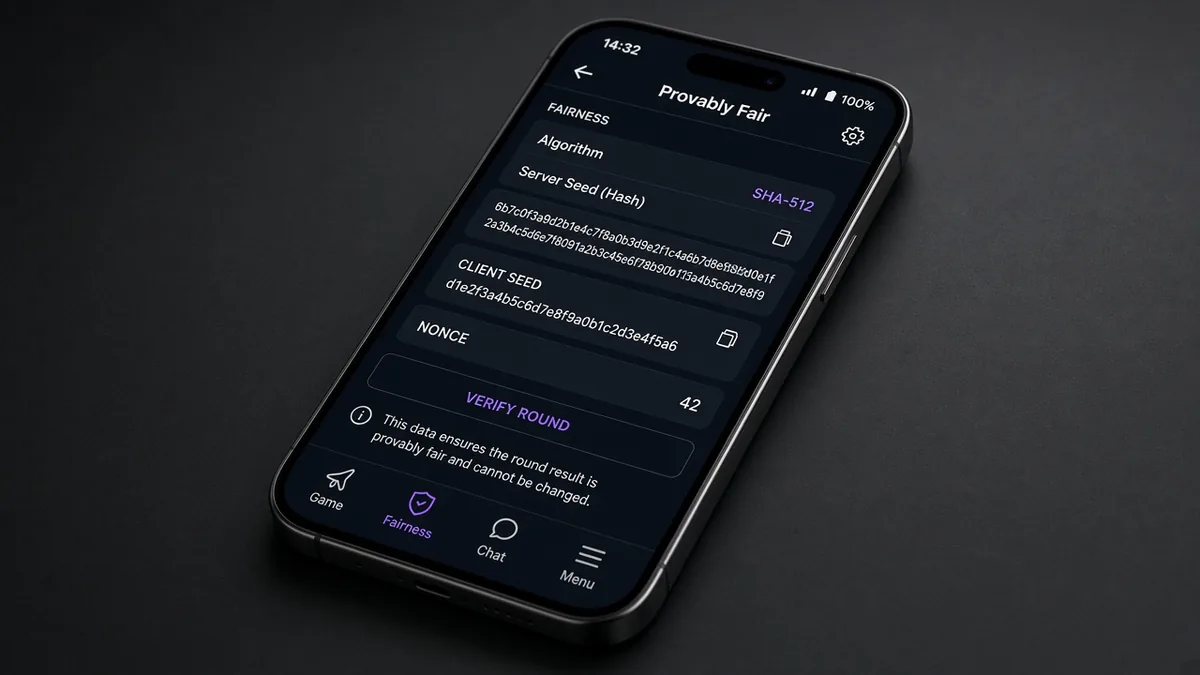
Search results for “SHA-512 hash Aviator”, “Aviator SHA512”, and “Aviator hash check” usually mean a fairness question: what is that long hex string in the client, and can you use it to prove a round was not quietly rewritten? That is a how-to / fairness topic. It is not a system that prints tomorrow’s multiplier.
This page explains what SHA-512 is doing in Provably Fair-style Aviator flows, how players typically verify a round, and where hash screenshots get misused as “signals”. We stay in the fairness lane. If you came looking for a tip feed, see the Aviator predictor for why those claims fail. Here the product is the cryptographic receipt — not Cash Out advice.
Short answer
SHA-512 is a cryptographic hash function: it turns an input (for example a server seed + client seed + nonce combination the operator documents) into a fixed-length fingerprint. In Aviator’s Provably Fair pattern, operators often commit to a hash before or as rounds run, then reveal the underlying seed material afterward so you can recompute and match. A matching hash supports “this outcome fits the committed inputs.” It does not tell you the next crash in advance.
Exact UI labels (Fairness, Provably Fair, Seeds, Hash) differ by operator skin. Use this article as a map, then follow the help text inside the lobby you actually play. Practice the game rhythm in the Aviator Log In demo; fairness panels appear where the operator exposes them.
What people are actually searching for
The query mixes honest jobs and noisy ones:
- “sha512 hash aviator”, “aviator sha-512”, “aviator provably fair hash”;
- “how to verify Aviator seed”, “Aviator server seed hash”;
- screenshots of hex strings pasted as “proof a tip worked”;
- APKs that claim to “decode SHA-512 into the next multiplier”.
Wanting a clear verification habit is fair. Treating a hash as a crystal ball is a different claim — and this page will not sell that claim.
Search engines also blur “SHA-512 Aviator” with generic cybersecurity explainers. Those articles describe the algorithm in the abstract. This page stays on the player job: find the fairness UI, understand commitment vs reveal, and ignore decoder funnels.
What SHA-512 is (without the marketing fog)
SHA-512 belongs to the SHA-2 family. Practical properties players care about:
- Fixed output size — a long hex string (512 bits), not a readable “next x” tip.
- Deterministic — same inputs → same hash.
- Avalanche — tiny input change → completely different hash.
- One-way for normal use — you verify by recomputing forward; you do not “reverse” a hash into a secret future crash.
In gambling UX, SHA-512 (or related hashes) usually fingerprint seed material so the house can show a commitment. The algorithm is public cryptography. The operator’s seed policy and UI still matter — a hash on a fake splash is not a certificate.
You do not need to implement SHA-512 by hand to benefit. You need to know that a hex string is a fingerprint of inputs, that matching after reveal is the point, and that nobody honest will ask you to “unlock” the hash with a paid activation code.
How Provably Fair-style flows use the hash
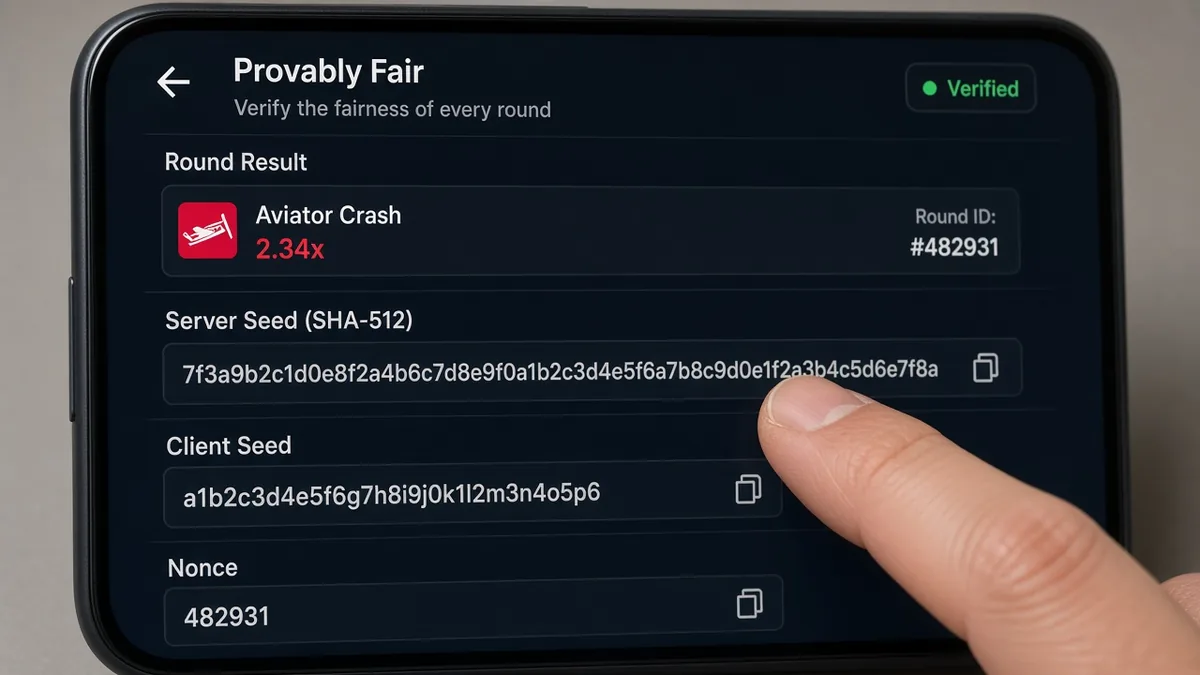
Skins differ, but the shape of the job is stable:
- Commitment — the client shows a hash (or hashed server seed) players can note before or during play.
- Play the round — you Bet and Cash Out as usual; the hash is not a tip panel.
- Reveal — after settlement, the operator may reveal server seed / combined inputs.
- Verify — recompute the hash from the documented inputs; compare to the earlier commitment. Match supports integrity of that recipe; mismatch is a support ticket, not a Telegram argument.
Some lobbies expose a built-in checker; others expect you to use documented external steps. Always prefer the path the operator’s own Fairness / Help page describes. Third-party “Aviator SHA-512 decoder” sites that ask for wallet logins are a different product — walk away.
Round history (how to check Aviator history) answers “what crashed.” The hash answers “does this reveal match the prior commitment?” Different questions.
If the operator rotates seeds on a schedule, that is normal housekeeping — not a glitch you must “hack.” Changing client seeds (where allowed) is a player control for preference, not a multiplier cheat. Read the Fairness help before you mash random buttons sold as “seed RNG boosters.”
What the hash does not do
Keep expectations honest:
- It does not print the next multiplier before flight.
- It does not replace bankroll limits or Cash Out discipline.
- It does not prove an entire casino is “safe” — it checks a documented fairness recipe for rounds that expose seeds.
- It does not make a random APK trustworthy because the icon says SHA-512.
If a seller says “paste the hash, get tomorrow’s 10x,” they are confusing a one-way fingerprint with a forecast. Cryptographic commitment is about integrity after the fact (or pre-commitment), not free foresight.
Also separate Provably Fair receipts from marketing badges that only say “SHA-512 secured” on a download page with no in-client Fairness panel. A sticker is cheap. A working verify loop inside Aviator is the test.
How to check a round safely in practice
Exact clicks vary, but a safe habit looks like this:
- Open Aviator from a lobby you chose on purpose (casino list / official app — not a cold “hash unlock” link).
- Open Fairness / Provably Fair / Seeds if the skin provides it.
- Note the committed hash when the UI shows it.
- After the round, open the reveal fields and follow the operator’s verify steps (in-client button or documented recompute).
- If numbers disagree, capture screens with timestamps and contact operator support — not a paid “hash fixer”.
Network lag can make panels slow; refresh once from the lobby before assuming fraud. Prefer real install routes habits that land in a normal web client over sideloads that “auto-verify SHA-512.”
UI labels move: Hash, SHA-512, Server seed (hashed), Client seed, Nonce. The job does not: compare commitment to reveal under the published recipe.
Write nothing into a chat that includes live passwords while you debug a hash mismatch. Support needs screenshots of Fairness fields and times — not your login secrets. Keep a local note of the committed hash if you plan to verify later the same day.
Common myths and lookalikes
| What you see | Safer reading |
|---|---|
| Long hex in Fairness panel | Normal commitment / receipt material |
| “Decode SHA-512 → next crash” APK | High-risk myth — hashes are not reverse tips |
| Chat screenshot of a hash as a signal | Costume — anyone can paste hex |
| Site asking for casino password to “check hash” | Credential harvest — verify inside the real client |
| Matching verify after reveal | Supports that recipe for that round — not future rounds |
| No fairness panel in a clone splash | May not be a real Aviator client at all |
When branding feels wrong, stop. A delayed session beats a drained wallet.
What this site will not do
We will not host a live Aviator seed database, sell a “SHA-512 predictor”, or claim that reading hex unlocks Cash Out edge. We will not pretend every operator exposes identical seed UX — skins differ; the cryptographic idea is shared.
Deposits, disputes, and licensing stay between you and the operator. Fairness receipts help when the operator documents them; they are not a substitute for choosing a lobby you trust.
We will not publish step-by-step “break SHA-512” recipes. There is nothing to break for tips — only verification of published inputs. If a guide needs you to install a mystery APK before you can “see the math,” the guide is the product being sold.
How to treat SHA-512 safely in 30 seconds
- Are you inside a real Aviator client (or documented demo), not a cold decoder page?
- Does the UI show a hash / hashed seed as a fairness commitment — without asking for your casino password on a third-party form?
- After reveal, can you follow the operator’s verify steps until the hash matches?
- Would the pitch still make sense if every “next multiplier” caption were removed?
- If verify fails, are you ready to ticket the operator with screenshots — not install a fixer APK?
For practice without cash pressure, use the Aviator Log In demo and learn Bet / Cash Out rhythm first; add fairness checks when your chosen lobby exposes them.
What to do instead of hunting hash “decoders”
Learn the Fairness panel in one trusted lobby. Verify a few settled rounds so the habit is boring. Cap the bankroll before the next flight. If someone sells SHA-512 as foresight, leave — integrity receipts are not tips.
If your real goal was round review, use how to check Aviator history. If your real goal was a shortcut, stop: a hash cannot see the next crash. Session timers still beat any “cryptographic strategy” myth.
Keep expectations honest. Understanding SHA-512 in Aviator means you can read a Provably Fair-style receipt. It does not smooth the RNG or guarantee profit.
One boring habit beats ten decoder tabs: once a week, verify a settled round in your usual lobby, confirm the match, close Fairness, and play only with a pre-set loss limit. If that habit feels pointless without a tip overlay, you were never looking for fairness — you were looking for foresight, and hashes will not supply it.
FAQ
What is the SHA-512 hash in Aviator?
Usually a cryptographic fingerprint used in Provably Fair-style commitment and verification. It is a long hex string derived from seed inputs the operator documents — not a readable prediction.
Can SHA-512 show the next multiplier?
No. Verification works by recomputing hashes from revealed inputs. You do not reverse a commitment hash into tomorrow’s crash.
Why do operators show a hash before revealing seeds?
Commitment: players can note the fingerprint first, then check that the later reveal still hashes to the same value. That supports integrity of the published recipe.
What if my verify step does not match?
Re-read the operator’s instructions, confirm you used the same seeds/nonce fields, then contact support with screenshots and timestamps. Do not send passwords to strangers offering a “fix.”
Is every Aviator lobby using SHA-512 the same way?
No. Skins and documentation differ. Some expose in-client checkers; some use related hash constructions. Follow the Fairness help for the site you play.
Is aviator-log-in.com the official SHA-512 authority?
No. We are an independent explainer — not Spribe and not your casino. Live fairness controls live in the operator client.
Where should I practice before worrying about hashes?
The Aviator Log In demo teaches the flight loop without an operator password. When you play for real, open Fairness only inside that brand’s own client — not a clone “hash decoder” APK.