How to win at Aviator: what strategy can and cannot do
People search for “how to win Aviator” as if there were a hidden system behind the game. In reality, Aviator is still a negative-expectation crash game: the multiplier is random, the next round cannot be predicted from the previous one, and no staking method removes the house edge. Strategy still helps when you treat it as risk control, session length, and decision quality — not as a way to force guaranteed profit.

Reframe the question. Stop asking how to beat the game and start asking how to avoid the common ways players lose control. In Aviator, that usually means chasing high multipliers after regret, raising stakes after losses, trusting prediction groups, or playing too long without a session plan. Winning sessions can happen, but they come from short-term variance, not from breaking the game.
Strategy Comparison: What Helps vs What Hurts
| Approach | Reality | Best use |
|---|---|---|
| Low cash-out targets | Higher hit rate, but smaller profit per win | Longer sessions and lower volatility |
| High multiplier chasing | Big upside, but frequent full losses | Only if you accept sharp swings |
| Martingale or doubling after loss | Does not change the odds and increases blow-up risk | Best avoided |
| Budget and stop rules | Do not change RTP, but protect decision-making | Strongly recommended |
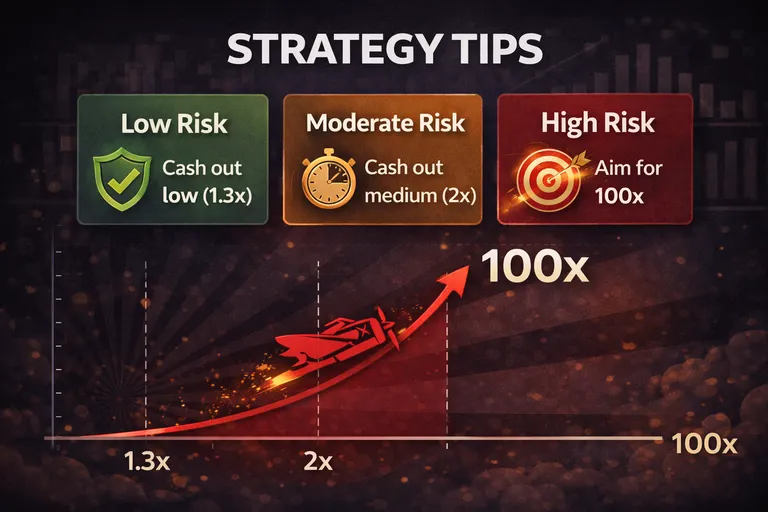
Tips for Smarter Play
- Set a session budget first: Decide what you can afford to lose before the first round starts.
- Keep stake size small: Many players use a small fixed share of bankroll per round so one losing streak does not wipe out the session quickly.
- Choose targets that match your goal: Lower targets usually mean more frequent wins; higher targets mean more volatility.
- Use auto cash-out if it helps discipline: It can reduce hesitation, regret, and last-second emotional changes.
- Stop when the plan says stop: A stop-loss, time limit, or profit cap is often more useful than any “winning trick.”
Cash-Out Targets: Risk vs Reward
| Target | Risk | Typical use |
|---|---|---|
| 1.20x–1.50x | Lower; frequent hits, smaller margin | Controlled play and longer sessions |
| 2.00x–3.00x | Medium; more variance | Balanced approach for some players |
| 4.00x+ | High; many rounds fail before target | Occasional upside with frequent misses |
What to Avoid
Avoid anyone claiming to know the next crash point, to have access to “signals”, or to offer a guaranteed method. Past rounds do not unlock the next one. Doubling systems can make losses faster, not safer. Overlong sessions also create their own danger: once frustration, overconfidence, or fatigue takes over, even a decent plan usually breaks apart.
Conclusion
The honest answer to “how to win at Aviator” is that there is no repeatable system that defeats the game. The closest thing to a useful strategy is disciplined bankroll management, realistic targets, and knowing when to stop. That will not remove the house edge, but it can help you play with fewer bad decisions and a clearer understanding of what the game really is.